The Longer I Photograph, the More I Respect Photography
The longer I photograph, the more I feel that photography deserves a certain kind of reverence.
Not because I think photography is sacred, or somehow more profound than everything else. But because, over time, I’ve come to understand that the camera in a photographer’s hands doesn’t hold as much power as we sometimes think it does.
With experience, it’s easy to fall into a certain confidence.
I know which angle will look better.
I know when to press the shutter.
I know how to direct people.
I even know how to create something that feels emotional.
But reverence asks for almost the opposite.
It asks you to admit that some things were never yours to create.
The expression on someone’s face. The way a parent looks at their child. The distance between two people who have known each other for years. The quiet history of a family.
Those things already exist.
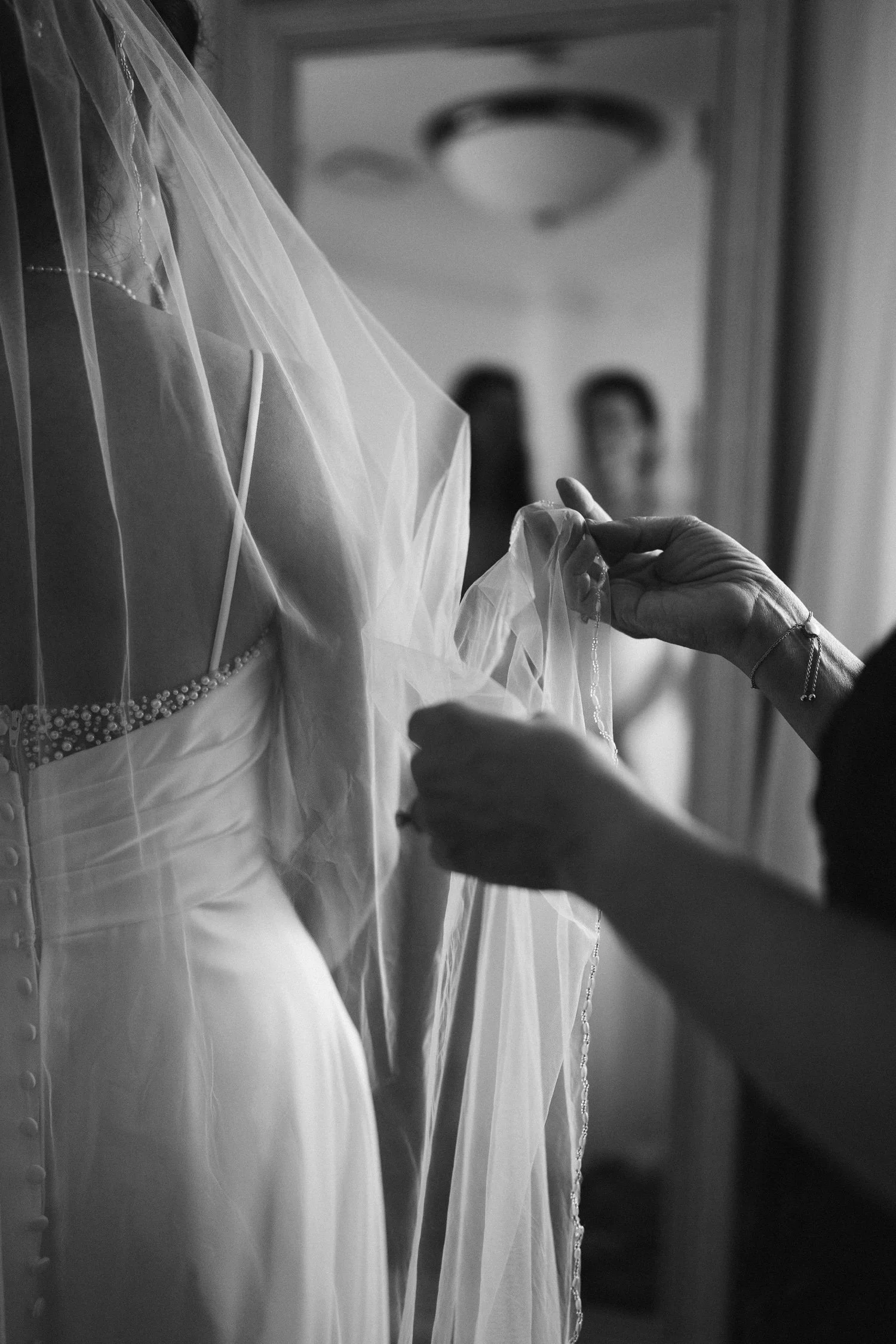
A photographer is simply given the privilege of standing nearby, noticing them, and leaving a record that they were once there.
To me, respecting photography begins with respecting what is real.
Not turning real people into props for the sake of making a “beautiful photograph.”
It means respecting moments that cannot be repeated. Some things happen only once. If you miss them, they are gone.
It also means respecting the people in front of the camera.
When someone allows you into something private, vulnerable, and sometimes once-in-a-lifetime, that access is a form of trust.
And perhaps more than anything, it means respecting time.
We photograph many weddings every year, and because of that, it can be easy to forget that for the people in our photographs, this day only happens once.
A photograph of a father sitting quietly in the corner might not seem remarkable at the time.
A grandmother looking at the bride and smiling.
A mother wiping away a tear just before the ceremony begins.
On the wedding day, these may not even be the most “beautiful” photographs.
But what about ten years from now?
Twenty?
When the people in these photographs have grown older. When some of them are no longer here. When that day has become part of a family’s shared memory.
The photographs that once seemed insignificant may become the ones that matter most.
Once you understand that, you hold the camera a little differently.
You become more restrained.
Not every moment needs direction.
Not every beautiful light needs to be used.
Not every person needs to be placed inside a composition you imagined beforehand.
Sometimes the best thing you can do is simply not interrupt.
Stand there.
Wait.
And before the moment disappears, press the shutter.
The longer I do this, the more I think that maturity as a photographer is not about becoming better at controlling what happens in front of the camera.
It is about knowing when not to control it.
The more technically capable you become, the less you feel the need to prove it.
Because eventually you realize that what makes a photograph truly valuable is often not something the photographer put there.
It comes from the people.
It comes from their relationships.
It comes from time.
And we are simply fortunate enough to be there, for a moment, to witness it.
So photography, to me, is becoming less and less about:
“How beautifully can I photograph this world?”
And more about:
“Whatever the world allows me to see, I will do my best to remember.”